youssef_itani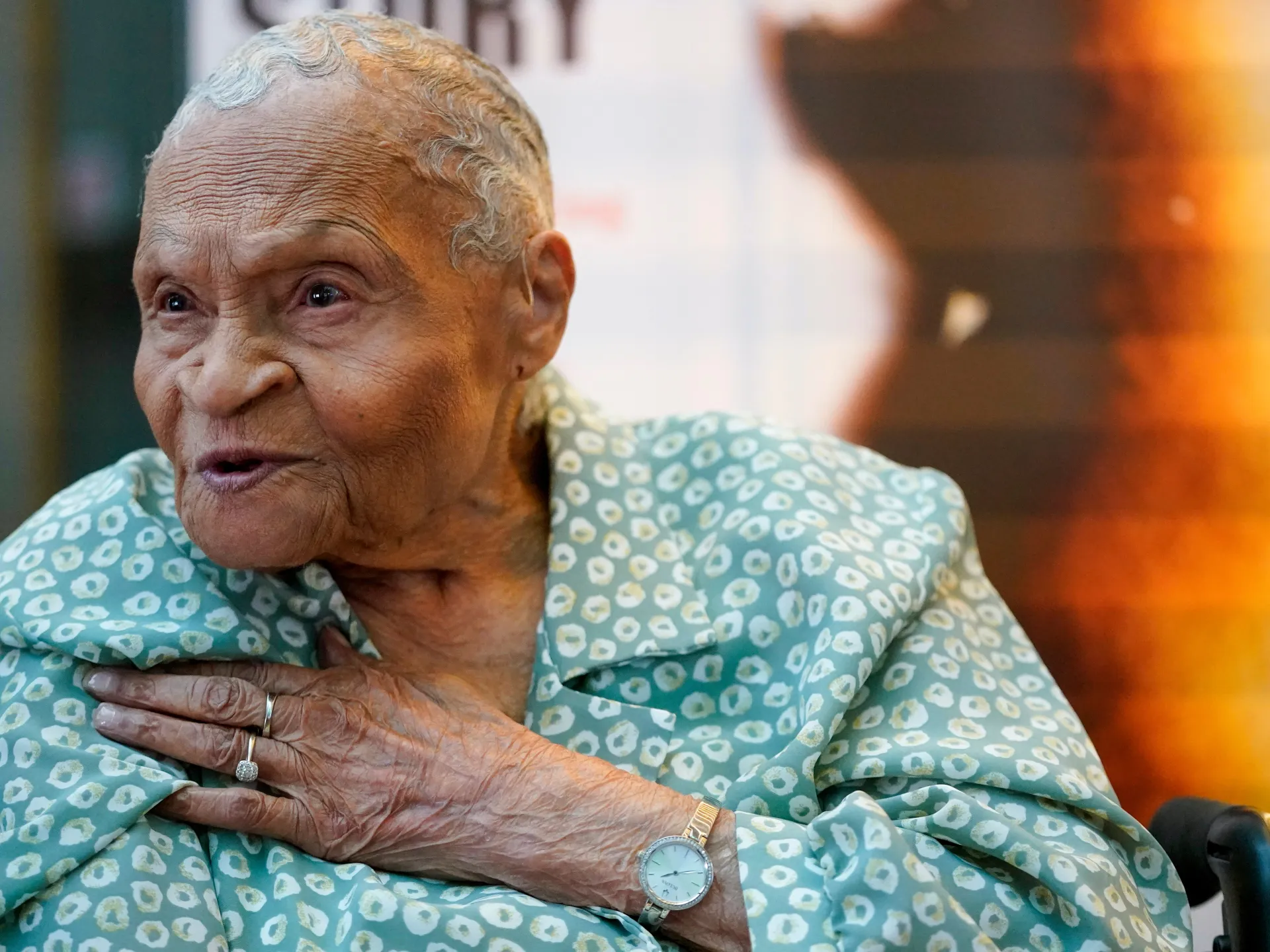
Fletcher fought for greater recognition of one of the deadliest incidents of race violence in US history.
Published On 25 Nov 2025
Viola Ford Fletcher, one of the last survivors of Oklahoma’s 1921 Tulsa Massacre, has died at age 111.
Despite her advanced age, Fletcher was a well-known activist thanks to her work trying to win justice for the victims of one of the worst episodes of racial violence in United States history.
Recommended Stories
list of 4 itemsend of list
“Today, our city mourns the loss of Mother Viola Fletcher. She was a survivor of one of the darkest chapters in our city’s history and endured more than anyone should,” Tulsa Mayor Monroe Nichols wrote in a Facebook post. “Mother Fletcher carried 111 years of truth, resilience, and grace and was a reminder of how far we’ve come and how far we must still go.”
Fletcher was seven years old at the time of the Tulsa Massacre in Oklahoma, a state living under the Jim Crow system that segregated the US South from the end of the 1800s until the Civil Rights Movement of the 1960s.
The massacre began on May 31, 1921, when police arrested 19-year-old Dick Rowland, a Black shoeshiner, over allegations that he had assaulted a white woman, according to a report by the US Justice Department’s Civil Rights Division.
As a survivor of the Tulsa Race Massacre, Viola Ford Fletcher bravely shared her story so that we’d never forget this painful part of our history. Michelle and I are grateful for her lifelong work to advance civil rights, and send our love to her family. https://t.co/km7RXnDKcW
— Barack Obama (@BarackObama) November 25, 2025
When a group of white men gathered at the courthouse calling for Rowland to be lynched, a group of Black men from a nearby community responded and tried to protect him before “all hell broke out”, the report said.
Over the next two days, vigilante groups and law enforcement looted and burned down 35 blocks of Tulsa’s Greenwood District, which was then home to one of the wealthiest Black communities in the US. The Bureau of Labour Statistics in 2024 estimated that the scale of the damage was around $32.2m when adjusted for inflation.
As many as 300 residents of Tulsa were killed and another 700 injured, the report said, although the final tally is unknown because many were buried in unmarked graves.
Survivors like Fletcher and her family were forced to leave the area. Left destitute, her family became sharecroppers, a form of subsistence work where farmers give over almost all their harvest to their landlord.
Rowland was never charged, after Sarah Page, the lift operator he was accused of assaulting, said that she did not want to prosecute the case.
Despite the scale of devastation, the Tulsa Massacre received limited national attention until Oklahoma state launched an investigative commission in 1997. Efforts to win compensation for victims in 2001, however, failed due to the statute of limitations.
On the centennial anniversary of the massacre, Fletcher testified before the US Congress in 2021 about her experiences and co-authored a memoir, Don’t Let Them Bury My Story, with her grandson in 2023.
Fletcher was mourned by US leaders like former President Barack Obama.
“As a survivor of the Tulsa Race Massacre, Viola Ford Fletcher bravely shared her story so that we’d never forget this painful part of our history. Michelle and I are grateful for her lifelong work to advance civil rights, and send our love to her family,” Obama posted on X.