youssef_itani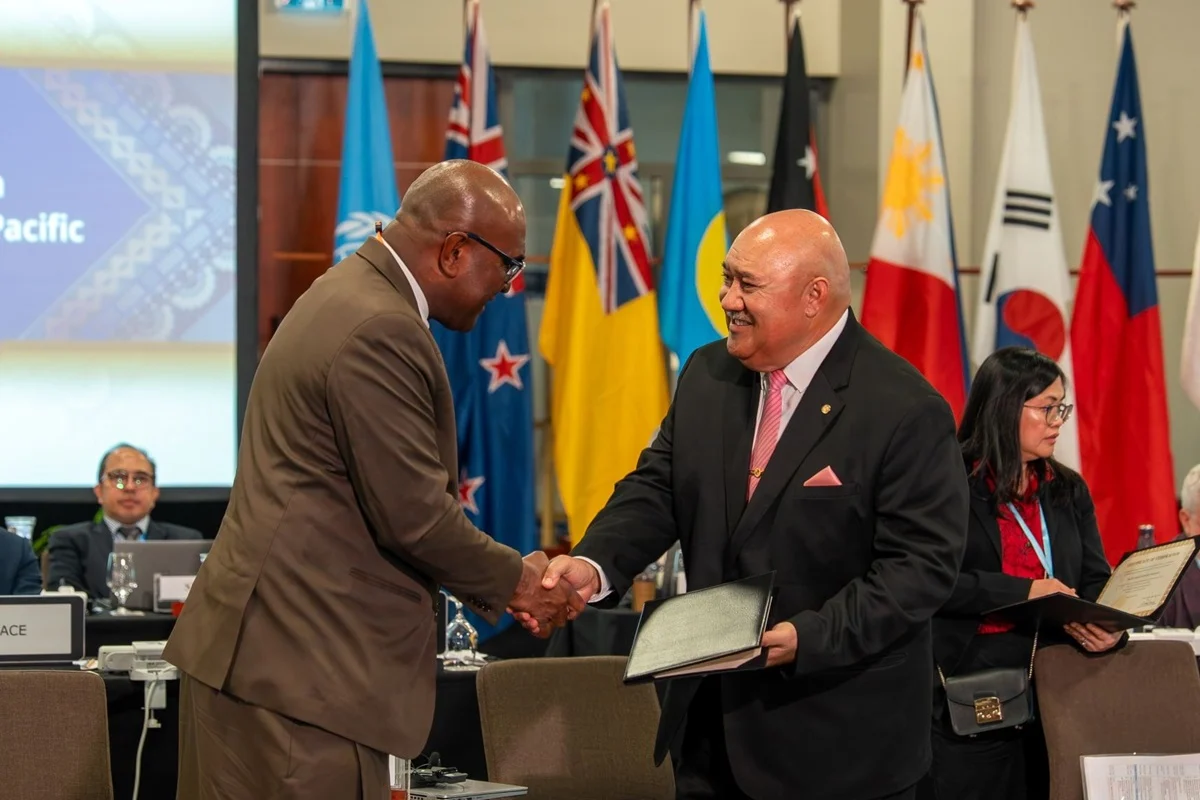
In a landmark public health achievement, Fiji has been validated by the World Health Organization (WHO) for eliminating trachoma as a public health problem. Trachoma, a neglected tropical disease (NTD) and the world’s leading infectious cause of blindness, no longer poses a public health threat in the country.
Trachoma is the first NTD to be eliminated in Fiji. Fiji is the 26th country to eliminate trachoma as a public health problem and the 58th country globally to eliminate at least one NTD.
“WHO congratulates Fiji and its network of global and local partners on reaching this milestone,” said Dr Tedros Adhanom Ghebreyesus, WHO Director-General. “Future generations of Fijians have been given a precious gift in being set free from the suffering that trachoma has inflicted on their ancestors.”
Trachoma is caused by the bacterium Chlamydia trachomatis and spreads through personal contact, interactions with contaminated surfaces and on flies that have been in contact with eye or nose discharge of an infected person. Repeated infections can lead to scarring, in-turning of the eyelids, and ultimately blindness. Globally, the disease remains endemic in many vulnerable communities where access to clean water and sanitation is limited.
Fiji’s success story
“Fiji’s success in eliminating trachoma is a beacon of what’s possible when communities, governments, and partners unite behind a shared goal”, said Dr Saia Ma’u Piukala, WHO Regional Director for the Western Pacific. “This is a celebration of the power of Pacific leadership and the impact of sustained investment in health. WHO congratulates Fiji and is committed to supporting countries across the Region in advancing health for all so that no one is left behind.”
Trachoma was once a significant public health problem in Fiji, with medical reports from the 1930s and community-based surveys in the 1950s documenting widespread disease and risk of blindness. By the 1980s, the condition had declined markedly, with cataract and refractive error emerging as the main causes of vision loss.
Concern however was renewed in the 2000s, when rapid assessments suggested high levels of active trachoma in children, prompting the Ministry of Health and Medical Services to launch a comprehensive programme to better understand the situation and take necessary action.
Since 2012, Fiji has undertaken a series of robust, internationally supported surveys and studies, including population-based prevalence surveys and laboratory testing, to understand the local epidemiology of trachoma and distinguish it from other causes of eye disease. This sustained effort, integrated with school health, water and sanitation initiatives, and community awareness programmes, has confirmed that trachoma is no longer a public health problem in Fiji and that systems are in place to identify and manage future cases.
“Fiji’s elimination of trachoma is a defining moment for health equity in the Pacific,” said Honourable Dr Ratu Atonio Rabici Lalabalavu, Minister of Health and Medical Services of Fiji. “This achievement reflects years of coordinated action – across villages, health facilities and regional platforms – demonstrating unwavering commitment of our health- care workers, communities leading the change. As we celebrate this milestone, we call on our donors and partners in the Pacific and beyond to continue supporting accelerated action of neglected tropical diseases to address other diseases not only in Fiji, but across the Pacific”.
Contribution to global progress
Neglected tropical diseases (NTDs) are a diverse group of diseases and conditions associated with devastating health, social and economic consequences. They are mainly prevalent mostly among impoverished communities in tropical areas. WHO estimates that NTDs affect more than 1 billion people.
The targets included in the Road map for neglected tropical diseases 2021–2030 cover the prevention, control, elimination and eradication of 20 diseases and disease groups by 2030.
Since 2016, 13 Member States in the Western Pacific Region, which covers 38 countries and areas, have been validated by WHO for eliminating at least one NTD. Of these, six (Cambodia, China, the Lao People’s Democratic Republic, Papua New Guinea, Vanuatu and Viet Nam) have successfully eliminated trachoma as a public health problem. Trachoma elimination is part of broader progress on NTDs in Fiji and the rest of the Western Pacific Region.
WHO continues to support countries in their efforts to eliminate trachoma and other NTDs, ensuring healthier lives for all, particularly the most disadvantaged.