youssef_itani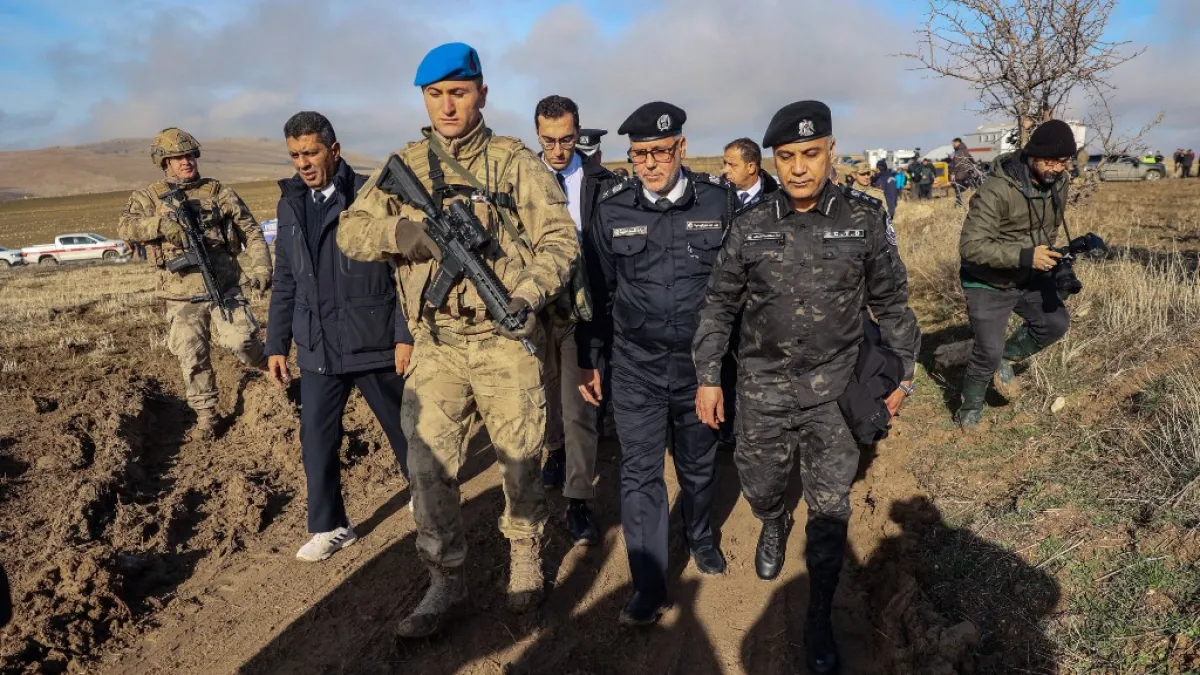
DNA testing delays funeral plans as investigators examine the wreckage of jet crash that killed Libyan army chief.
Published On 25 Dec 2025
Officials from Libya and Turkiye have stepped up coordination over the investigation into a plane crash near Ankara that killed Libya’s army chief and seven other people as forensic work and preparations for repatriating the bodies are conducted.
Libya’s Criminal Investigation Department chief, Major General Mahmoud Ashour, led a delegation to the Ankara Chief Public Prosecutor’s Office on Thursday as part of the joint inquiry.
The visit followed discussions with Turkish prosecutors overseeing the case.
On Tuesday, a private jet carrying Libya’s army chief of staff, Mohammed Ali Ahmed Al-Haddad, reported an electrical malfunction shortly after taking off from Ankara Esenboga Airport.
According to Turkiye’s head of communications, Burhanettin Duran, the aircraft, bound for Tripoli, requested an emergency landing 16 minutes after takeoff.
Air traffic controllers redirected the Dassault Falcon 50 back towards Ankara’s airport, but radar contact was lost three minutes later as the jet descended.
The wreckage was found near the village of Kesikkavak in Ankara’s Haymana district. Eight people, including three crew members, were killed.
Search and rescue teams reached the site after Turkiye’s Ministry of Interior launched emergency operations while multiple authorities joined the investigation into the cause of the crash.
Funeral prayers delayed
Reporting from Misrata, Libya, Al Jazeera’s Malik Traina said preparations were under way for the return of Al-Haddad’s body although the timeline remains uncertain.
“Earlier today, we spoke to the minister of communications, and we were told the funeral prayer will be held tomorrow. That’s starting to change, now they’ve been receiving phone calls from government officials saying that it could likely be postponed till Saturday,” Traina said on Thursday.
Traina said the recovery process has taken longer due to the severity of the crash, which scattered remains across a wide area and necessitated DNA testing.
“There’s a lot of pressure for that process to finish as soon as possible. Whether or not that’ll happen, we’re gonna have to wait and see.
“He really was someone who tried to build up the military institutions, especially in western Libya, a place that is divided with powerful armed groups and militias controlling vast areas of land.”