youssef_itani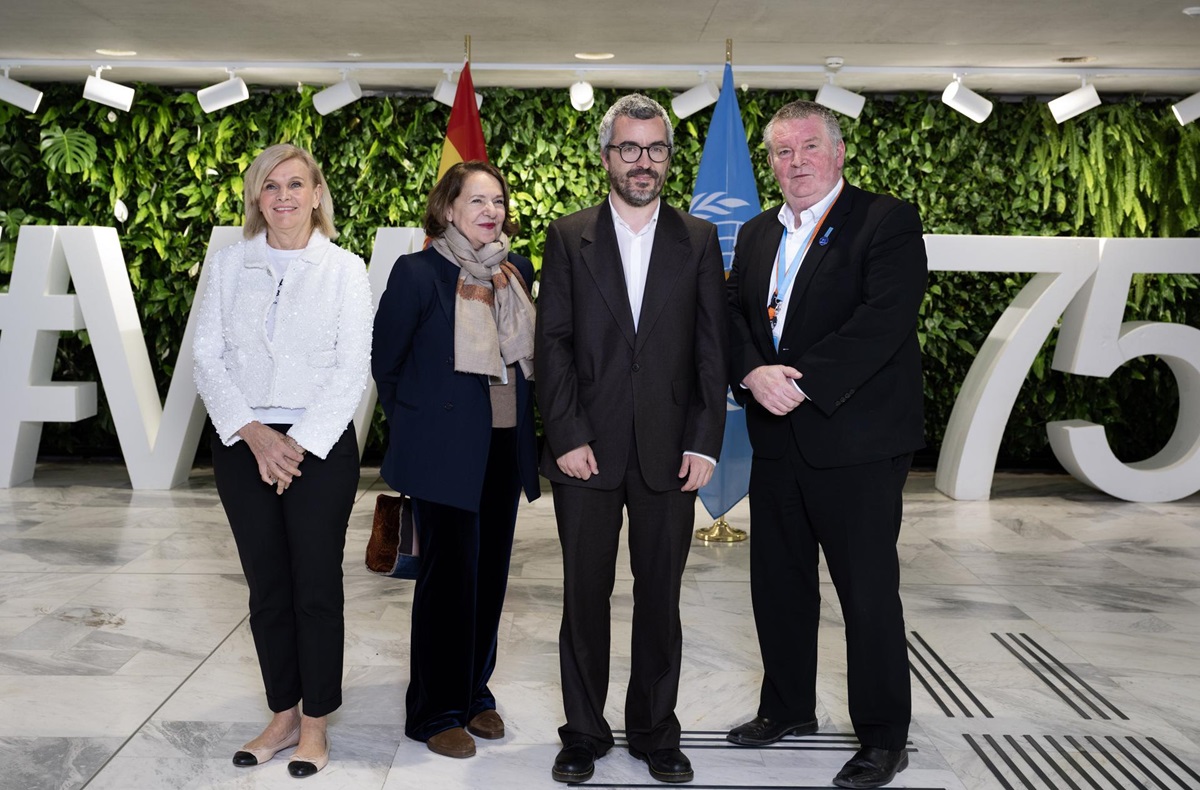
WHO welcomed Mr Javier Padilla Bernáldez, Spain’s Secretary of State for Health and his delegation on 23 and 24 April 2024 to discuss joint global health priorities. Amongst others, Spain’s focus is on universal health coverage and health systems strengthening; pandemic response and emergency medical teams; organ and tissue transplantation; malaria and other tropical diseases; and polio.
During the visit, participants focused on plans and on-going work across a number of areas, including WHO’s Transplantation Program to increase availability; ethical access and oversight of transplantation of human cells; tissues and organs. They also discussed social determinants of health; tobacco and alcohol control; primary health care; access to medicines; universal health coverage; ensuring healthy lives at all ages; nutrition and food safety; health workforce; and emergencies.
Mr Javier Padilla was accompanied by Ms Paola Cannata Molero, Director of the Cabinet of the Secretary of State for Health, Mr Jacobo Fernández Álvarez, Technical Secretary General, Mr Héctor Tejero Franco, Advisor in the Cabinet of the Minister of Health and Responsible for Health and Climate Change, and Mr Roberto Carro Vázquez, Senior Technician of the Office of the Secretary of State for Health. The delegation also had representatives of Spain’s Permanent Mission to the United Nations Office and Other International Organizations in Geneva, including H.E. Ambassador Ms A. Díaz-Rato Revuelta, H.E. Ambassador Ms Clara Cabrera Brasero, and Counsellor Ms María del Carmen Martínez de la Peña.
The Spanish delegation met with Dr Ailan Li, Assistant Director General (ADG) for Universal Health Coverage, Healthier Populations, Dr Catharina Boehme, ADG for External Relations and Governance, Dr Yukiko Nakatani, ADG for Access to Medicines and Health products and ADG for Antimicrobial Resistance ad interim, Dr Michael Ryan, Deputy Director-General and Executive Director for WHO Health Health Emergencies Programme.

Left to right: Dr Maria Neira, Director, Environment, Climate Change and Health, H.E. Ambassador Aurora Díaz-Rato Revuelta, Dr Javier Padilla Bernáldez, Secretary of State for Health, Michael Ryan, Deputy Director-General and Executive Director, WHO Health Emergencies Programme. Credit: WHO/Chris Black
WHO’s Management and their teams thanked Spain for their financial and technical support over the years. Spain’s support was instrumental in the last biennium in improving access to quality essential health services and medicines; addressing climate change and healthier environments; and strengthening country capacity in both data and innovation. Spain continues to be a champion of the Global Polio Eradication Initiative.
Spain also contributes to WHO’s work in tackling malaria and neglected and other tropical diseases, and has helped the Organization strengthen countries’ preparedness, readiness, prevention and response for health emergencies, epidemics and pandemics. Spain’s contribution to WHO’s Health Emergency Appeal has helped to protect health in humanitarian emergencies to break the cycles of poverty.
As a world leader in the field of organ and tissue transplantation, Spain plays a key role in WHO’s efforts through its Ministry of Health to improve the safety, quality, efficacy and access to transplants. WHO appreciates and acknowledges Spain as a partner who is not only leading and sharing expertise in support of countries’ development of sustainable, self-sufficient organ transplant systems, but also more generally, a key partner to WHO in health for all.