youssef_itani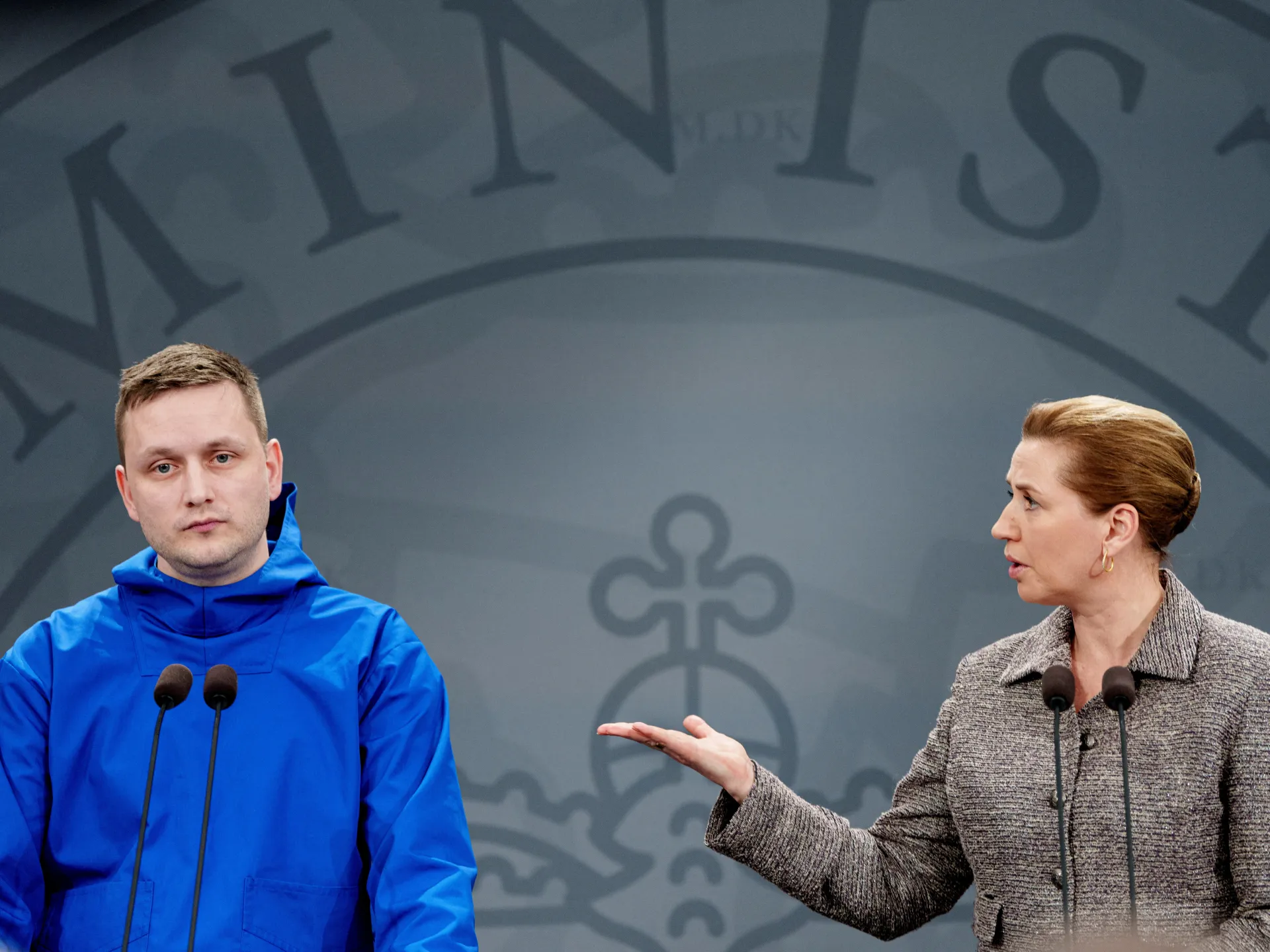
“If we have to choose between the United States and Denmark here and now, we choose Denmark,” said Greenland’s PM.
Published On 13 Jan 2026
Greenland Prime Minister Jens-Frederik Nielsen has said the self-governed Danish territory wants to remain part of Denmark rather than join the United States, amid US President Donald Trump’s ongoing push to take over the island.
Speaking at a news conference in Copenhagen alongside Denmark’s Prime Minister Mette Frederiksen, Nielsen said the autonomous Arctic territory would prefer to remain Danish.
Recommended Stories
list of 4 itemsend of list
“We are now facing a geopolitical crisis, and if we have to choose between the United States and Denmark here and now, we choose Denmark,” he said.
Frederiksen said it had not been easy to stand up to what she slammed as “completely unacceptable pressure from our closest ally”.
Nielsen’s comments came a day after the government of Greenland rejected Trump’s threats of a takeover.
“The United States has once again reiterated its desire to take over Greenland. This is something that the governing coalition in Greenland cannot accept under any circumstance,” said the island’s coalition government.
“As part of the Danish commonwealth, Greenland is a member of NATO, and the defence of Greenland must therefore be through NATO,” it added.
Trump has insisted that he will seize Greenland, threatening that the territory will be brought under US control “one way or another”.
Those threats have created a crisis for NATO, sparking outrage from European allies who have warned that any takeover of Greenland would have serious repercussions for ties between the US and Europe.
Aaja Chemnitz, a Greenlandic politician in the Danish parliament, told Al Jazeera that a majority of Greenland’s 56,000 people did not want to become US citizens.
“Greenland is not for sale, and Greenland will never be for sale,” Chemnitz, from the Inuit Ataqatigiit party, said.
“People seem to think they can buy the Greenlandic soul. It is our identity, our language, our culture – and it would look completely different if you became an American citizen, and that is not something a majority in Greenland want.”