youssef_itani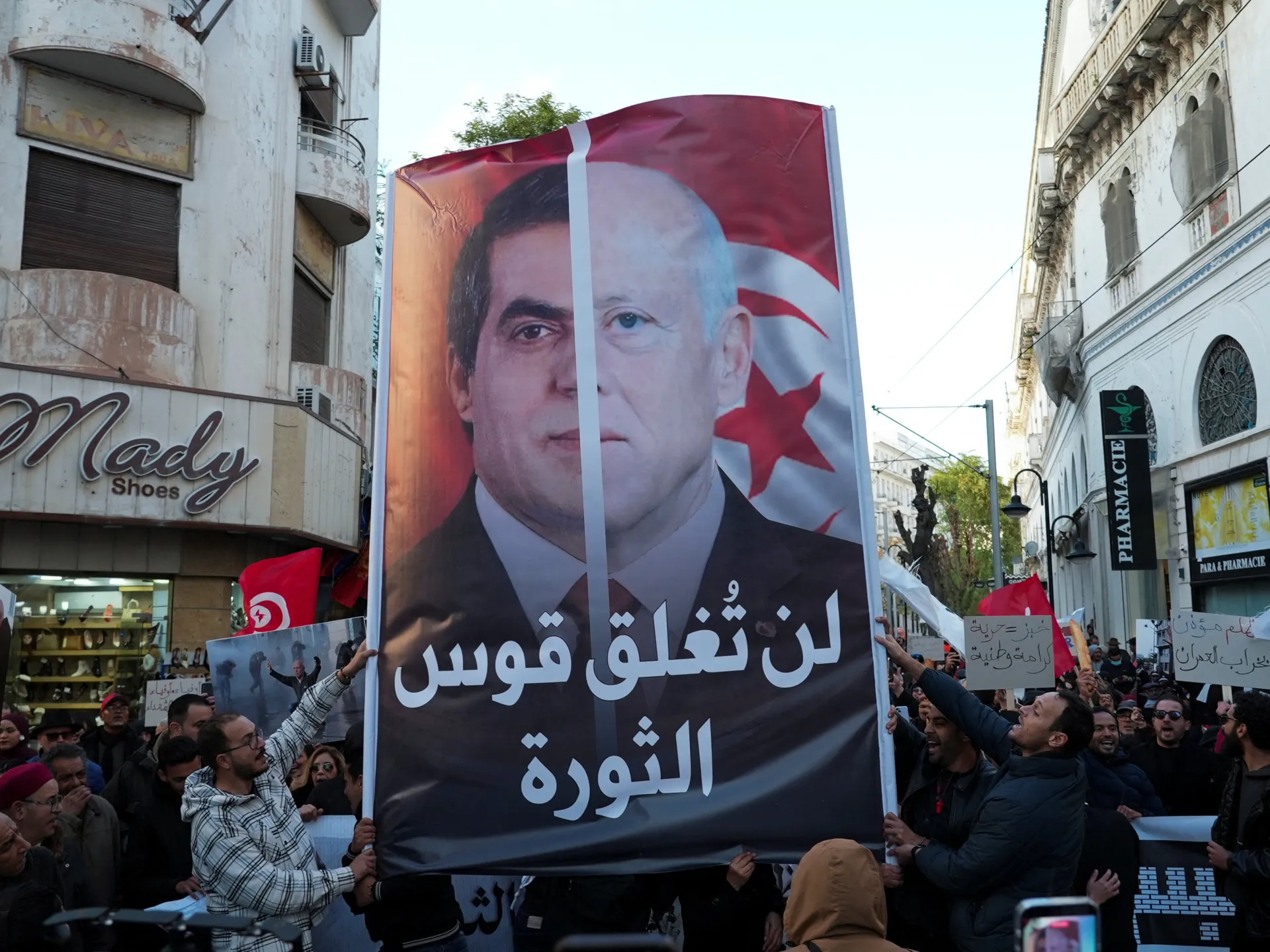
Press rights campaigners slammed the case against Bohran Bssaies and Mourad Zghidi as “legal persecution”.
Published On 22 Jan 2026
A Tunisian court has handed new prison terms to two well-known media figures in what critics say is the government’s latest attempt to punish dissent.
The criminal chamber of the Tunis Court of First Instance sentenced radio journalists Bohran Bssaies and Mourad Zghidi to three and a half years in prison on Thursday for “money laundering”, a judicial source told Tunisia’s state TAP news agency.
Recommended Stories
list of 3 itemsend of list
The conviction adds to a growing list of cases against opposition figures, journalists, and other perceived critics of President Kais Saied, who rights groups say has overseen a wide-reaching rollback on freedoms since taking office in 2019.
Bssaies and Zghidi were first jailed in May 2024 on charges of “spreading false news” under Tunisia’s controversial Decree Law 54 against cybercrime. Press rights group Reporters Without Borders (RSF) said the journalists’ “only ‘crime’ was to comment on and criticise political decisions” by Saied.
Before serving their eight-month sentence, Tunisia’s judiciary brought additional tax-related charges, which the journalists’ defence says are based on routine tax matters.
RSF described the case as “legal persecution” and urged Tunisian authorities to immediately release Bssaies and Zghidi.
“So long as journalists are put behind bars for their work, the Tunisian public’s right to information will remain seriously threatened, along with their legitimate expectation to be properly informed,” said RSF’s North Africa director, Oussama Bouagila.
The case follows the arrest in December of the country’s top opposition figure, Ahmed Nejib Chebbi.
Chebii, 81, was sentenced to 12 years for plotting against the state, in a trial denounced by rights groups as a politically motivated “sham”.
The month prior, dozens more opposition figures were sentenced to as many as 45 years in prison in a so-called “conspiracy case”.
Tunisian courts have also ordered the release of several high-profile detainees in recent months – including lawyer and Saied critic Sonia Dahmani and journalist Chatha Belhaj Mubarak.
“Chadha Hadj Mbarek’s release must not remain an isolated act. On the contrary, it should pave the way towards respect for press freedom,” said RSF’s Bouagila.
In 2025, Tunisia fell 11 places in media watchdog RSF’s World Press Freedom Index, dropping from 118th to 129th out of 180 countries.