youssef_itani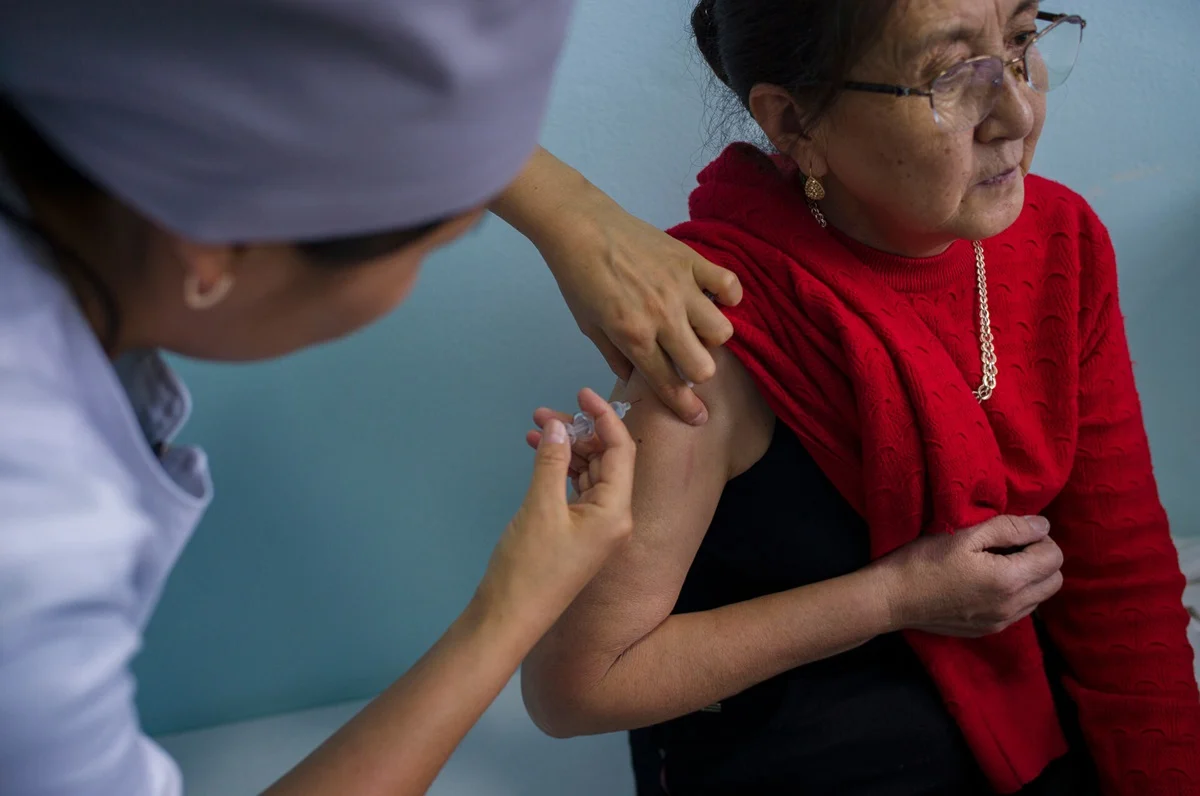
The World Health Organization (WHO) today announced recommendations for the viral composition of influenza (or “flu”) vaccines for the 2026-2027 northern hemisphere influenza season. The announcement was made following a 4-day consultation examining global influenza surveillance data.
Influenza vaccine composition must be regularly updated because influenza viruses are constantly changing. WHO’s recommendations are used by national vaccine regulatory agencies and pharmaceutical companies around the world to develop, produce, and license influenza vaccines for the following influenza season. This ensures that vaccines are closely matched to the viruses expected to circulate, offering the best possible protection against severe illness and death.
Held twice a year, once each for the northern and southern hemispheres, these consultations bring together experts from WHO’s Collaborating Centres and Essential Regulatory Laboratories of the WHO Global Influenza Surveillance and Response System (GISRS) to review and analyze data generated by GISRS and partners.
“Season after season, constantly evolving influenza viruses circulate globally, showing us how connected our world is. Shared risks require shared action,” said Dr Tedros Adhanom Ghebreyesus, WHO Director-General. “WHO’s recommendations for influenza vaccine composition rest on the diligent, year‑round work of the Global Influenza Surveillance and Response System (GISRS) and partners. Thanks to GISRS, next season’s vaccines have been updated to counter the latest strains of influenza viruses, in turn better protecting communities.”
Seasonal influenza
In August 2025, a notably different variant of the A(H3N2) virus emerged (classified as J.2.4.1, also referred to as “subclade K”) and spread rapidly across the globe. This contributed to an earlier start to the influenza season in many countries, with several reporting higher‑than‑usual levels of activity. ‘Subclade K’ accounted for the majority of influenza viruses reported across regions.
Overall, influenza A viruses were predominant, with other variants of A(H3N2) and A(H1N1) also recorded. Low levels of influenza B viruses (B/Victoria lineage) were detected, with no cases of B/Yamagata lineage viruses recorded since March 2020.
Zoonotic influenza, including ‘bird flu’
As part of the review, experts also looked at influenza viruses circulating in animals, particularly those that have caused infections in humans. These animal or zoonotic influenza viruses remain a significant concern because of their potential to cause pandemics.
Since 23 September 2025, following the last consultation, 25 human infections with zoonotic influenza were reported to WHO from 6 countries. The majority of these cases had been exposed to infected animals or to environments contaminated with influenza viruses. No human-to-human transmission was reported.
These biannual meetings include a detailed assessment of these viruses and the selection of new candidate vaccine viruses (CVVs), which can be used rapidly to manufacture vaccines should a pandemic threat arise. At this meeting, experts recommended the development of a new CVV for an A(H9N2) virus.
For vaccines for use in the 2026-2027 northern hemisphere influenza season, WHO recommends the following:
Egg-based vaccines
an A/Missouri/11/2025 (H1N1)pdm09-like virus;
an A/Darwin/1454/2025 (H3N2)-like virus; and
a B/Tokyo/EIS13-175/2025 (B/Victoria lineage)-like virus.
Cell culture-, recombinant protein- or nucleic acid-based vaccines
an A/Missouri/11/2025 (H1N1)pdm09-like virus;
an A/Darwin/1415/2025 (H3N2)-like virus; and
a B/Pennsylvania/14/2025 (B/Victoria lineage)-like virus.
Seasonal influenza (the flu) is an acute respiratory infection caused by influenza viruses. It is common in all parts of the world. There are around a billion cases of seasonal influenza annually, including 3–5 million cases of severe illness. It causes an estimated 290 000 to 650 000 respiratory deaths annually.
Global influenza surveillance has been conducted through WHO’s Global Influenza Surveillance and Response System (GISRS) since 1952, making it the longest-standing global platform for systematic disease surveillance.