youssef_itani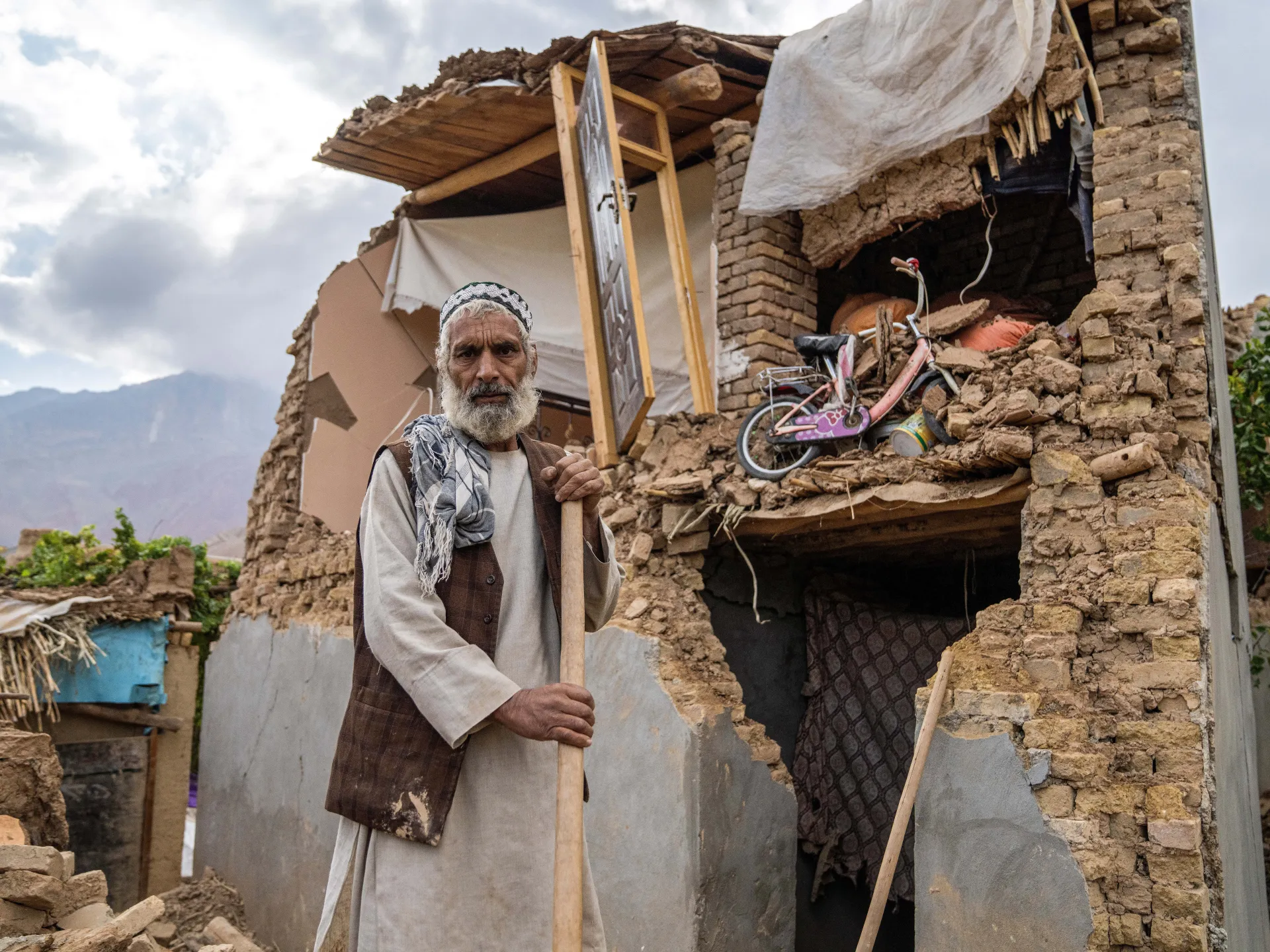
Published On 6 Nov 2025
Survivors of a powerful earthquake that demolished homes in Afghanistan are now struggling to find shelter as they contend with heavy rainfall and the looming winter cold.
Their concerns are shared by those who survived an even more devastating earthquake two months earlier.
The latest magnitude 6.3 tremor struck the northern provinces of Samangan and Balkh, killing at least 27 people, according to Taliban authorities.
In Samangan’s Khulm district, where the earthquake was centred, a resident named Gulabuddin is grieving for his daughter-in-law, who could not escape the family home in time. Gulabuddin himself sustained a head injury from falling debris.
“We lost all of our belongings,” he told the AFP news agency. “Winter is coming. We have children aged four and five. Where can we go? For two nights now, we have been staying with relatives.”
Rain has transformed dirt paths into muddy pools around collapsed walls and fallen roofs. Similar destruction was visible in eastern Afghanistan following a shallow magnitude 6.0 earthquake in late August that killed more than 2,200 people – the deadliest in Afghanistan’s recent history.
In Kunar province’s mountainous village of Mazar Dara, Bazarga Safay witnessed children being swept away during that earlier quake. Two months later, she fears cold weather will kill more.
Safay, a 50-year-old farmer who lost two relatives in the previous earthquake, now shares a tent with 15 people, including 12 children. “We were given a tent, but it’s not suitable for winter,” she explained.
Most villagers sleep outdoors in gardens or on terraces, afraid to stay in damaged houses as aftershocks continue. They face impending temperatures as low as -20 degrees Celsius (-4 degrees Fahrenheit) without adequate winter clothing or blankets.
“The earthquake happened in summer, and the organisations provided aid based on the needs at the time,” explained Najibullah Hanafi, a Taliban information official in Kunar. “Now that winter is coming, they need clothes and things that can help them survive the cold.”
Despite these challenging conditions, international aid organisations warn their assistance will be limited as major donors, led by the United States government, have withdrawn funding.
Camps have been established at the base of Mazar Dara mountain, yet the International Organization for Migration reports that 77 percent of survivors intend to remain in place through winter – either because they cannot afford to relocate or have nowhere else to go.
For many, rebuilding stronger homes is the only option, even if it means abandoning traditional stone construction. Taliban authorities claim to be building dozens of new houses in Mazar Dara, though journalists observed only one bulldozer clearing debris.
“We need to rebuild the right way, with concrete and bricks,” said farmer Sayid Wali Safay, 27.
Resident Awal Jan added: “We want to rebuild our house in the same place, but not in the same way. If we don’t want our house to collapse again, only concrete will work.”