youssef_itani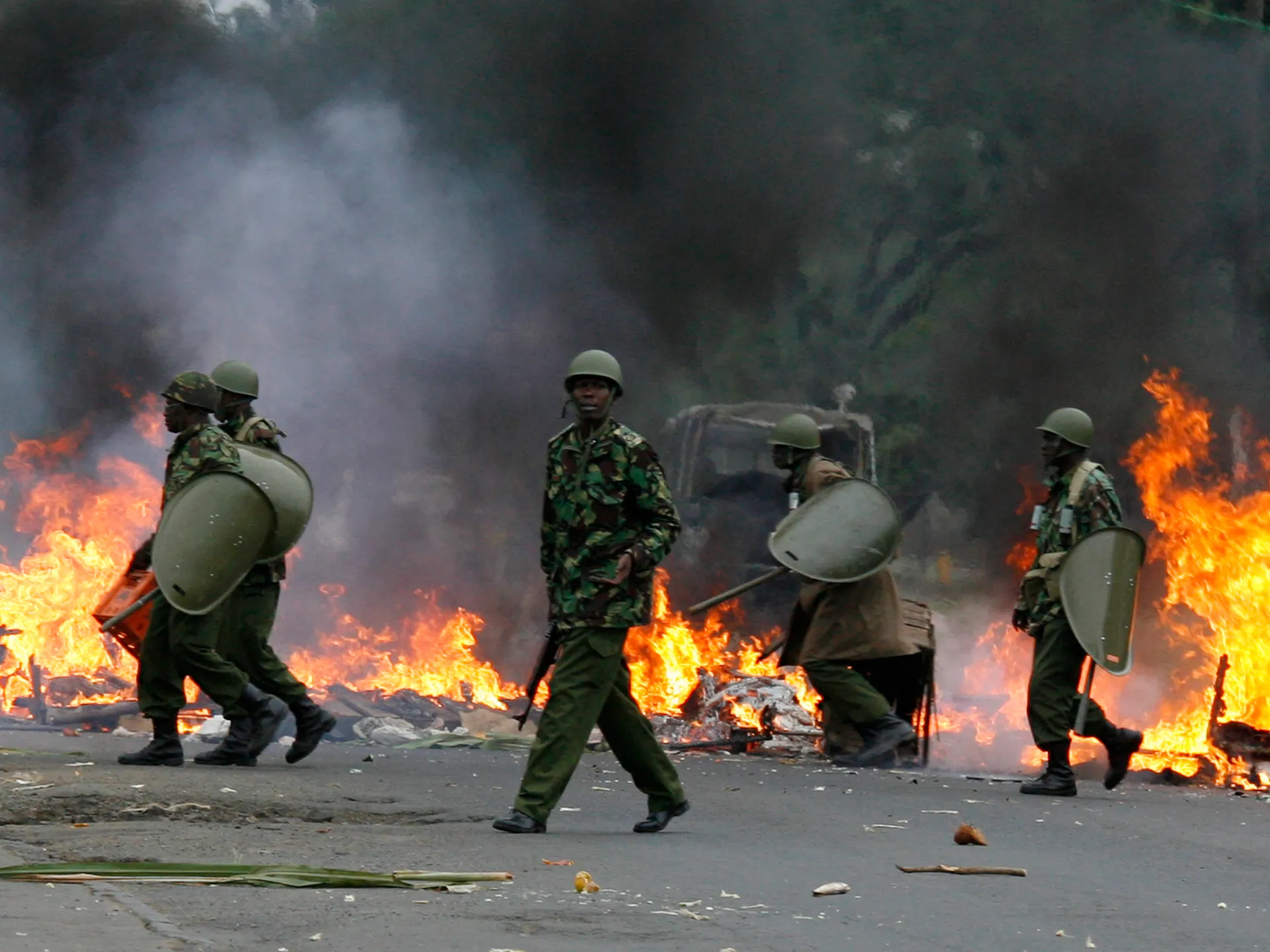
As Kenya prepares for its next general election, due in less than 20 months’ time, 2026 will prove to be a critical year. With local and global restraints on political violence being hollowed out at the very time when trust in the credibility of the election system is at an all-time low, serious trouble beckons unless urgent steps are taken.
Violence in Kenyan elections is rarely the product of that perennial bogeyman, tribalism. It is almost exclusively a state-generated phenomenon that requires a particular alignment of circumstances. Two matter above all else: first, whether the election itself is credible; second, whether the incumbent is running for re-election.
Since the reintroduction of multiparty politics in 1991, Kenya has had seven competitive presidential elections. It was only in four of them that significant violence was witnessed; in all four, the inevitably unpopular incumbent was running. In 2002, 2013 and 2022, when no incumbent was on the ballot, violence was comparatively muted, even where the credibility of the election itself was contested.
The lesson is clear. It is the efforts to improve the credibility of the election and to enforce institutional restraints on state actors that are the best safeguard.
Kenya has come some way in this regard since the conflagration that followed the disputed 2007 election. The 2010 constitution introduced checks on the wanton exercise of state power, most importantly an independent judiciary, which has proven a credible venue for settling election disputes. Reforms to the election system to enhance transparency, most evident in the 2022 elections, have also taken some of the sting out of the polls.
Today, however, that progress is at risk. And President William Ruto is running for re-election.
Following a long delay, the Independent Electoral and Boundaries Commission (IEBC) was reconstituted in July last year, albeit not without controversy following the president’s initial decision to ignore a court order stopping the appointment of commissioners following a legal challenge to their suitability.
That stained the commission’s credibility from the very start. The shambolic and violent by-elections for dozens of empty seats of senators and national assembly members, which took place in November, further damaged public confidence in the commission as an independent referee. This needs urgent addressing.
But the credibility of the election is down to more than just the IEBC. The Kenyan media has an especially important role to play. For years, out of fear of antagonising those in power, major media houses have treated the announcement of vote tallies as an official function best left to electoral bodies. That timidity has repeatedly undermined public confidence in election outcomes.
The 2022 election was a missed opportunity. Even with polling-station results publicly available, Kenyan media appeared unable – or unwilling – to independently aggregate figures and explain what the numbers were saying in real time. In 2027, the media cannot continue to ignore its responsibilities. There is time to collaborate, rebuild capacity and invest in data journalism. They should prepare to independently verify results and call the election, even when that makes power uncomfortable.
Media weakness is also increasingly being exploited through online disinformation. And the tools are becoming far more powerful. Kenya is no stranger to election manipulation in the digital age. It was one of the testing grounds for Cambridge Analytica, whose microtargeting operations during the 2013 election helped normalise data-driven psychological campaigning long before the scandal broke globally.
Today, artificial intelligence raises the stakes dramatically. AI-driven disinformation can flood platforms with synthetic content, fabricate audio and video, impersonate trusted voices, and target communities with tailored narratives at speed and scale.
In environments where trust in institutions is already thin, disinformation does not merely mislead. It can destabilise. It can delegitimise results before votes are cast, provoke panic or mobilisation based on false claims, and provide justification for repression in the name of preserving public order. A strong, capable, reliable and effective media will be crucial in mitigating such impacts.
Regional and international institutions and pressures have also been critical in containing the violent appetites of Kenyan elites, but these are now in decay. Today’s global environment makes such restraint far less likely. Across East Africa, governments are normalising repression as elections approach. In neighbouring Tanzania and Uganda, authorities have acted with impunity to suppress dissent and election protests.
And this regional shift is occurring alongside a broader collapse in global accountability. Western backing for Israel’s genocide in Gaza has accelerated the erosion of international norms, undermined institutions such as the International Criminal Court, and created a permissive environment for malevolent actors.
Given these circumstances, Kenya must focus on shoring up its internal defences. Time is running out to insist on reforms to insulate independent state institutions from political interference. Though the Kriegler Commission, set up in the aftermath of the 2007/8 election, recommended that any changes to election rules should be concluded at least two years before the polls, we are already past that deadline.
Still, 2026 presents an opportunity to rebuild the coalitions that can mobilise citizen action as a bulwark against state repression. In the 1990s, these included civil society organisations, the church and the media.
The Gen Z protests showed that Kenyan youth can also be a potent political force and it is likely that we will see them out on the streets yet again this year. The question is whether their elders will join them in standing up against state machinations.
Violence next year is not inevitable. But preventing it requires urgent action to protect the gains in electoral transparency and mobilise popular action as a shield against abuse of state power.
The clock is ticking.
The views expressed in this article are the author’s own and do not necessarily reflect Al Jazeera’s editorial stance.